
AI for Good
Kin Health, Vi and Gaia

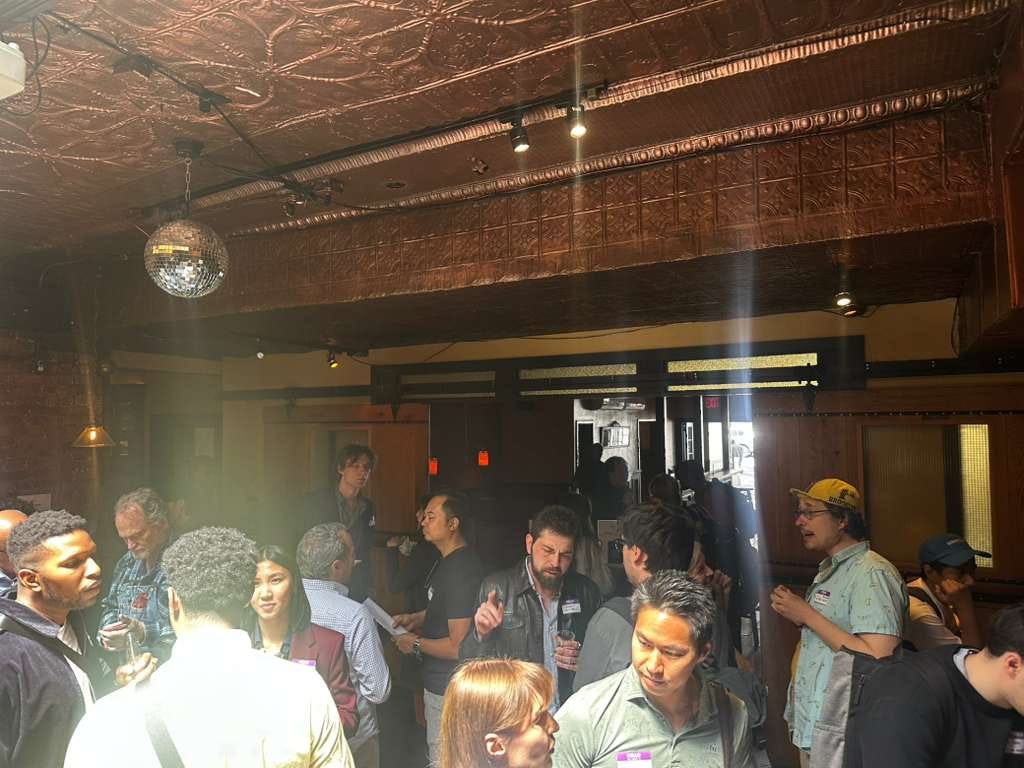
I recently I co-hosted the first AI for Good NYC Meetup with my friend and fellow social impact enthusiast, Angela Ng, and it was a success! ~70 individuals showed up to discuss how AI and technology can be harnessed to solve society’s most pressing problems. People came with half-baked ideas or early prototypes. We broke people into groups, including: Healthcare, Education, Climate, Economic Mobility and AI Policy and Safety to brainstorm on what to build next and where the current market is succeeding and failing. The biggest takeaway is that this community is craving a safe space to discuss their ideas and builders want to be part of the solution and not the problem.
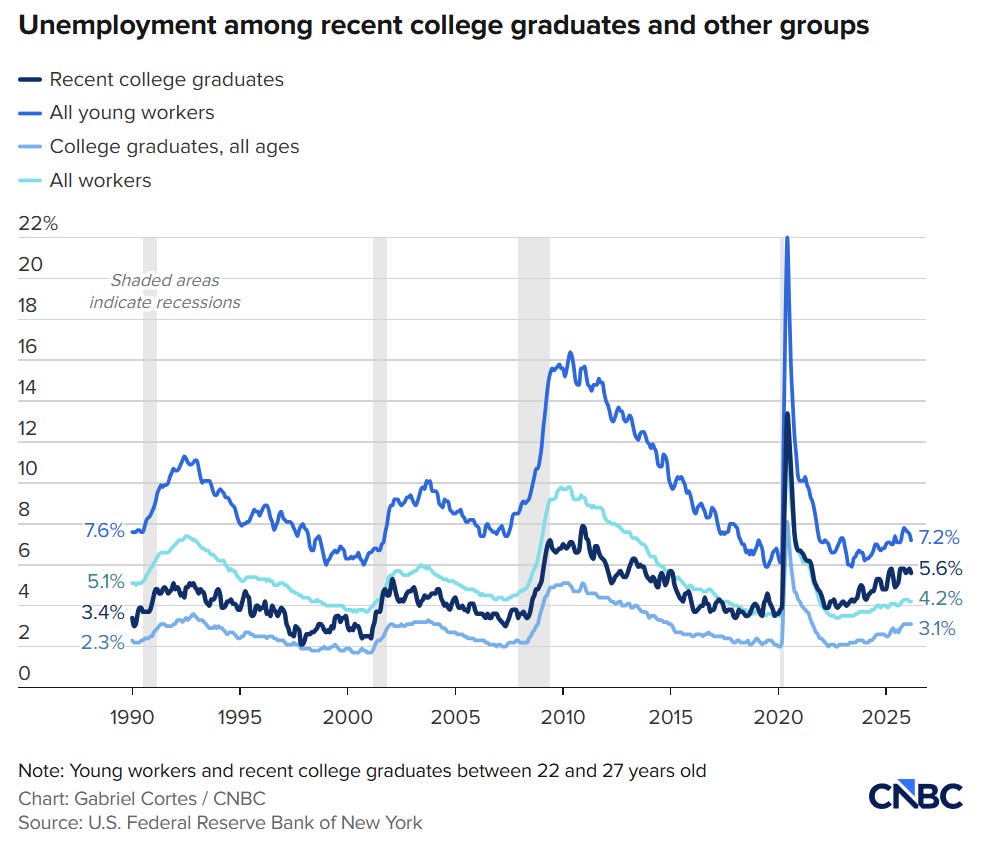
Meanwhile, GenZ is booing commencement speakers that mention AI. Amongst GenZ and recent college grads, AI has a bad rep with many of them blaming it for their layoffs and the bleak job market. Unemployment for recent college graduates is 5.6% and creeping up. Last week, Meta laid off roughly 10% of its 78K staff to offset investments in AI. While the frustrations are legitimate, AI is simultaneously creating demand for new roles and making certain services dramatically more accessible. My thesis is that AI will also be the tool to bring about solutions that can support job reskilling, upskilling and lead to better outcomes. “AI for Good NYC” is the space to discuss that reality — it will be us: the founders, funders, AI researchers, operators, and enthusiasts to build the future that we want to see.
Our next AI for Good NYC Meetup will take place during NY Tech Week on Monday, June 1st. Come if you would like a safe space to share and learn.
Cheers to more IRL events!
Digging In: Can AI be used for Good?
The current narrative is that AI can be used for increased efficiencies and better bottom-line. However, there are many real societal problems where AI can help save lives and improve outcomes. For a specific set of these high-need problems, AI can be the right instrument to build the solution or enable the solution that can dramatically improve outcomes.
So far in 2026 amongst impact-focused startups I am tracking, I see four clear categories where AI is being leveraged to bring about better outcomes. Unsurprisingly, the biggest category of AI-use is healthcare but we are seeing increased innovation in other areas, including workforce and education. A few of the things I am seeing in 2026:
Closing the expertise gap
One of the deepest problems in health and education is that there are not always enough experts to go around, which limits the access of underserved populations. More than 137 million Americans live in a federally designated mental health professional shortage area while the average wait to see a primary care provider is 31 days.
The way that AI is supporting these experts is by stretching their time and freeing them up of paperwork that bogs them down from seeing patients. The companies doing this are mainly keeping the human in the loop but allowing AI to take over the admin work.
For example: Jimini’s AI tool works as a supervised member of a behavioral health care team, with clinicians in control. Blossom pairs psychiatrists with AI copilots so they spend less time on billing and more on patients. Amigo trains clinical agents on millions of simulated encounters to support between-session touchpoints.
Making the invisible patient visible
Some of the most expensive patients in the system are the hardest to reach, and a lot of what they need slips through the cracks. A patient remembers less than half of what a doctor tells them. A chronic condition goes undocumented and the clinic serving low-income patients gets underpaid for it. A prior authorization stalls and care never happens.
AI is good at exactly this kind of invisible-work problem. Kin records a visit and turns it into a plain-language summary, closing a recall gap that falls hardest on patients with the least education. For example, Keebler surfaces undocumented chronic conditions so that the providers serving high-acuity, low-income populations actually get paid. Latent and Ethermed automate prior authorization, one of the most documented barriers to care for Medicaid and safety-net patients. All of them remove friction that disproportionately hurts the people with the fewest resources to fight it.
Underwriting the future against today’s cost
Some of the highest-impact interventions don’t pay off for years, which makes them almost impossible to fund. GLP-1s cost money now and save money later. IVF runs $22,000 a cycle out of pocket. Value-based care promises to pay for outcomes but has always drowned in the human cost of tracking them.
AI is the analytics layer that makes a better model financially legible. Gaia uses machine learning on millions of fertility outcomes to underwrite outcome-based IVF financing, so a failed first cycle doesn’t end the road. Ilant quantifies total cost of care so payers will actually sign value-based GLP-1 contracts. Chamber wraps AI around existing cardiology practices so they can take on risk they couldn’t manage alone.
Meeting displaced workers where they are
The same automation wave that’s displacing workers can also help them land new ones. Pelgo pairs AI with human counselors to make career-transition services, once reserved for executives, affordable for anyone. NextWork builds proof-of-work portfolios that can replace credentials.
AI can also support the hourly workforce to better manage their schedules to maximize earnings. For example, Ando forecasts demand so hourly workers get schedules that account for childcare and second jobs.
Where the human is the answer
In some problem areas, the solutions will live with humans because they are the highest-trust solutions with the highest stakes. The companies below maintain humans as the core differentiator. Still, I’d argue that even in these service-based companies, these companies will purchase or build the AI-enablement piece.
Maternal care: Malama, Flourish, and Nadia all build around doulas matched to patients on language and culture, staying through the full postpartum year where maternal mortality actually happens.
Community health: Zócalo’s promotoras and Baba’s nurse advocates work because trust is built inside the community by a person who is accountable for the outcome, not imported through a screen.
Why it matters: The populations hardest to reach are the ones who have been failed most often by the current system. For them, a trusted human is a fundamental part of care delivery and I don’t envision that changing anytime soon.
Select Funding Rounds
Workforce 💼
CVRD Health, a benefits compliance platform raised $5M in Seed funding led by Upfront Ventures to modernize health and welfare benefits for federal contractors. CVRD gives contractors real-time visibility into their fringe benefit obligations and spend, then pairs that with full benefits administration through an ICHRA that hands each employee tax-free dollars to pick their own coverage. Every worker also gets a dedicated member advocate to help select a plan and answer coverage questions.
Why it matters: Fringe dollars on prevailing-wage contracts are legally the workers’ money, and CVRD routes more of it into real coverage for the service workers staffing federal buildings, military bases, and veterans’ hospitals instead of letting an inefficient system eat it.
Women’s Health 🤰
Gaia, an AI-powered IVF financing and care platform secured a $100M debt facility from Viola Credit to scale across the United States. The raise follows a $14M Series A (Jan/2025) led by Valar Ventures. Gaia uses machine learning trained on millions of historical fertility outcomes to forecast a patient’s probability of success and match them to optimal clinics. It then underwrites outcome-based financing plans for IVF, egg freezing, and embryo transfer. The model flips the industry’s fee-for-service standard: if a first IVF cycle fails, Gaia covers the next at no extra cost, and embryo transfer plans include unlimited transfers until a live birth.
Why it matters: IVF carries a nationwide median cost of $22,000 per cycle paid almost entirely out of pocket, and Gaia’s outcome protection plus five-year payment plans make treatment financially viable and accessible.
Digital Health 🚑
Kin Health, a patient-facing AI app for medical visits, raised $9M seed led by Maveron. Kin records doctor’s appointments and turns them into plain-language summaries, building a longitudinal health record from what physicians actually said. Patients today recall only 49% of decisions from a medical visit, dropping to 38% for patients without a high school education. The app is free for patients; revenue comes from downstream referrals, labs, and prescriptions, modeled on the GoodRx playbook.
Why it matters: Kin is the first consumer facing app that looks to close the recall gap that falls hardest on the patients with the least education and the most to lose from forgetting their care plan.
The Path, a behavioral health AI built for safety raised a $14.3M Seed funding led by Prime Movers Lab to scale a therapy-and-coaching app trained not to simply agree with you. Founded by Calm alums and motivational author Tony Robbins, the app lets users pick from 11 virtual AI therapists and tune them for directness. Its model is post-trained from open source rather than wrapped over a consumer LLM, and it scored 95 on the Vera-MH mental health safety benchmark versus 65 for general chatbots.
Why it matters: After a year of headlines about engagement-optimized chatbots harming vulnerable users, a behavioral-health-specific model built to challenge rather than placate is a real answer to a real safety gap.
Nourish, a dietitian-led metabolic health clinic, raised $100M Series C led by Menlo Ventures to scale its clinical network and AI care infrastructure.
Nourish pairs 10K+ registered dietitians (“RD”) with AI agents to deliver insurance-covered care for chronic metabolic conditions, integrating GLP-1 management, lab testing, and medical care into one virtual model. Clinical outcomes include: 8% weight loss, 1.3-point A1C reduction, and 68% GLP-1 persistence at six months versus a 46% industry benchmark. The RD-led workforce (rather than physician-led prescribing) increases access.
Why it matters: Most GLP-1 patients drop off the drug within six months and regain the weight. Nourish is making in-network dietitian care a covered benefit at national scale, reaching 200M+ Americans and keeping patients on therapy long enough for outcomes to actually stick.
Vi, an enterprise AI platform for healthcare, life sciences, and wellness completed a $145M transaction at a $1.64B valuation. Vi sells a suite of vertically specialized AI agents that act as an execution layer for enterprises, driving next-best actions across patient navigation, physician workflows, clinical trial acceleration, and drug commercialization. It runs on a proprietary dataset of clinical, behavioral, and operational signals, and says it already serves 100+ enterprise customers and supports over 190 million lives.
Why it matters: Vi frames its goal as health abundance regardless of wealth or geography, betting that AI infrastructure embedded across the care system can make precise, predictive care cheaper and more widely deliverable over time. This one is one to watch for the outcomes argument.
Fintech 💰
RemotePass, a global employment, payroll, and embedded-fintech platform raised a $17.4M in Series B round led by EBRD Venture Capital. RemotePass handles cross-border hiring, payroll, contractor management, and compliance for distributed teams, with a fintech layer that gives workers USD accounts, global cards, and health insurance. It targets emerging-market geographies where entity setup, banking, and benefits infrastructure are hardest, and has scaled to 35,000+ workers across 150+ countries and over $800M in cross-border payroll.
Why it matters: For workers in markets underserved by traditional banking, RemotePass bundles USD accounts, cards, and health insurance into the system that already pays them, putting financial products and benefits within reach of people who would otherwise lack access.
EdTech 📚
Journify Learning, an evidence-based AI assistant for special education raised $3.8M in seed funding led by Reach Capital to automate special ed paperwork and compliance so teachers can spend their time on instruction. Journify automates the IEP documentation and compliance work that consumes special educators, integrating with support providers and grounding its recommendations in evidence-based practices rather than generic AI output. The platform is active in schools across 17 states, supports over 10k students, and teachers report saving more than four hours per day.
Why it matters: Special education has the country’s largest teacher shortage with 45 states reporting deficits, and the students who depend most on these teachers lose ground when half the workday goes to paperwork instead of instruction.
Have a great week! As always, I am learning in public.
-Paulina